



Options For Financing Resin Driveway, Patios And Home…

Home Improvement Loan Calculator:
How to Finance Your Resin Driveway in the UK

You can use the dedicated home improvement loan calculator here…
Read on if you need to dig a little deeper into financing your home improvement.
A resin driveway is one of those home upgrades that transforms a property overnight. It lifts kerb appeal, reduces maintenance, and sits very nicely on a future valuation report. Naturally, homeowners start asking the same big question: how do you actually finance it?
This guide walks through the practical UK-based options for funding a resin driveway, whether you prefer a personal loan for home improvement, are exploring zero interest home improvement loans, or simply want to compare home improvement loans near me with a sensible plan.
As Arthur Conan Doyle put it, “It is a capital mistake to theorise before one has data.”
So let’s gather the data, shall we?
A good resin driveway can cost anywhere from £3,000 to £12,000 depending on size, dig-out requirements, edging, and drainage. Rather than draining savings, many homeowners spread the cost with:
• a loan for home improvements
• a local authority support scheme
• a credit union product
• a bank-issued loan for home improvement with fixed monthly payments
Financing makes the upgrade more accessible, especially when you want a higher-quality resin finish rather than a budget compromise.
1. Personal Loans for Home Improvement (Most Common UK Option)
Most UK homeowners go straight for a personal loan for home improvement because it’s quick, widely available, and doesn’t require collateral.
Key features:
• Loan amounts often range from £1,000–£25,000
• Fixed interest and fixed terms (1–7 years)
• Funds arrive into your bank account, meaning you can use any contractor you prefer
• No fees for settling early with many lenders
When comparing home improvement loans rates, look at:
• the APR, not just the headline rate
• whether representative rates apply to your loan size
• early repayment charges
• whether the lender offers payment holidays
Major UK lenders offering these loans:
High street banks (Nationwide, NatWest, Lloyds, Halifax), digital lenders (Monzo Flex or Zopa), and credit unions.
2. Credit Union Loans (Often Lower Rates)
Credit unions are a hidden gem for homeowners wanting fair, capped interest and flexible payments.
Many offer loans for home improvement with:
• no early settlement penalties
• more forgiving affordability checks
• lower APRs than traditional lenders
They’re particularly useful if someone doesn’t have perfect credit but still wants to upgrade their home responsibly.
3. Local Authority Support & Grants (England, Scotland, Wales & Northern Ireland)
Resin driveways are part of broader external improvement schemes. Grants are not always guaranteed, but depending on your council, you may be eligible for:
• Disabled Facilities Grants (DFG) – where access improvements or safe surfaces are required
• Home Upgrade Grants (HUG2) – focused on insulation and efficiency, but occasionally tied to exterior works when safety or drainage is involved
• Local discretionary improvement grants – varies by council
These aren’t guaranteed for cosmetic upgrades, but worth exploring if the driveway improvement relates to safety, mobility, or access.
4. 0% and Zero-Interest Home Improvement Loans
A small number of UK councils and housing associations provide zero-interest home improvement loans for specific purposes, usually tied to:
• safety upgrades
• essential property improvements
• environmental upgrades
• removal of trip hazards or unsafe surfaces
The rules differ, but these are usually:
• interest-free
• repayable over 1–5 years
• issued only after an assessment
This won’t suit purely aesthetic resin upgrades, but if your driveway is cracked, sinking, or hazardous, it is genuinely worth asking.
5. Retail Finance Through Home Improvement Companies
Some contractors offer finance directly through FCA-approved partners.
These options may include:
• low-APR instalment plans
• “buy now, pay later” home improvement plans
• deferred payment options
• fixed-term finance agreements
Always check:
• whether the finance is regulated and who the lender is
• whether the total repayable amount is sensible compared with a standard personal loan
• if early repayment is allowed
Explore Your Costs with the Home Improvement Loan Calculator
Before choosing how to finance a resin driveway, patio or garden upgrade, it helps to have a rough idea of the figures.
You can explore your numbers using this Home Improvement Loan Calculator…
It’s a simple way to estimate:
• the likely project cost
• what monthly payments could look like using a typical UK home improvement loan
• how much a well-designed resin driveway may add to your property’s kerb appeal
• the difference that design choices, size and preparation work make
As ever, it’s a guide rather than a substitute for proper financial advice, because lenders each have their own criteria and every home is a different puzzle. It’s a useful starting point to understand what’s possible, then you can book a free on-site assessment to get accurate measurements and a fixed quotation.
“To improve is to change; to be perfect is to change often.”
Winston Churchill had a point. Knowing your numbers early helps you plan the change with confidence.
What’s the Best Financing Option for a Resin Driveway?
It depends on your situation:
Best for most homeowners:
A standard loan for home improvements from a mainstream bank due to predictable repayments.
Best for affordability:
A credit union or council-supported scheme.
Best when you want speed:
A lender offering same-day decisions and payouts.
Best when you want the lowest total cost:
Whichever loan has the lowest APR over a reasonable term.
What’s the Best Financing Option for a Resin Driveway?
It depends on your situation:
Best for most homeowners:
A standard loan for home improvements from a mainstream bank due to predictable repayments.
Best for affordability:
A credit union or council-supported scheme.
Best when you want speed:
A lender offering same-day decisions and payouts.
Best when you want the lowest total cost:
Whichever loan has the lowest APR over a reasonable term.
When weighing up costs or considering financing options, it often helps to see real-world results rather than imagining the finished surface. Viewing completed projects gives context to pricing and shows how preparation, layout, and finish affect the overall outcome. Exploring a professional installation gallery can also help homeowners understand what good workmanship actually looks like, beyond sales descriptions. You can view a wide range of completed exterior projects, finishes, and detailing standards in the HQ project gallery here.
Practical Tips Before You Borrow
• Get two or three resin driveway quotes to ensure the loan amount is accurate
• Don’t borrow more “just in case”; it only increases the interest
• Check your credit score before applying
• Avoid applying to several lenders on the same day
• Use the home improvement loan calculator again after receiving an actual quote
Adding a resin driveway is a long-term enhancement, so pairing that with a well-structured finance plan keeps everything balanced.
More Help: Resin Cost & Finance FAQs
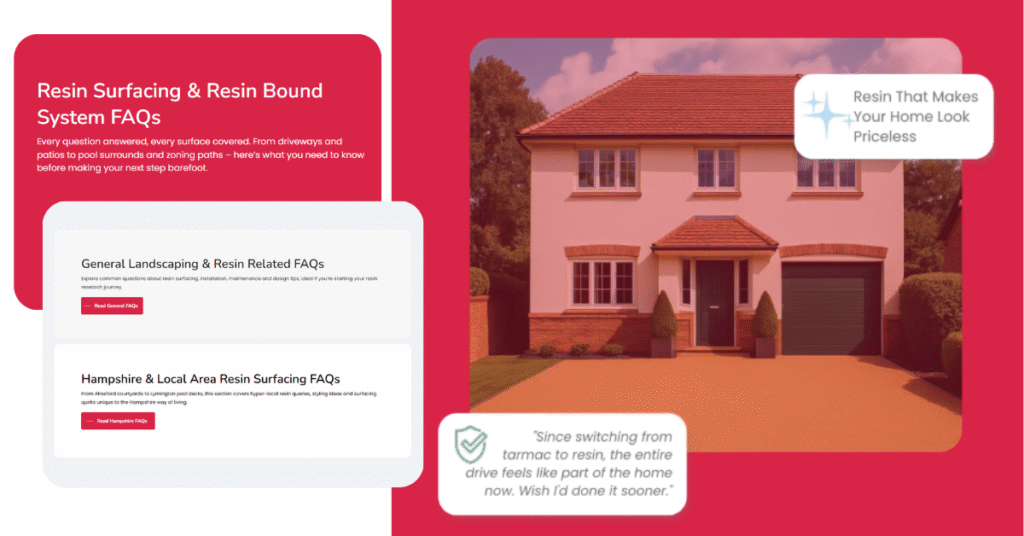
If you want quick answers to common cost questions, you can explore the dedicated FAQ hub here…
It covers topics such as:
• how much a resin-bound driveway, patio or path typically costs
• why quotes vary so much between companies
• whether financing is available for resin driveways and garden projects
• what affects the total installation cost
• whether resin is more cost-effective long-term than paving, concrete or tarmac
• how a resin driveway can increase property value
These FAQs work well alongside the calculator because they show which factors actually influence cost and which are just noise in the market. Readers get a grounded sense of budgeting before they take the next step.
TLDR
• Start with a home improvement loan calculator to estimate project costs, monthly repayments and affordability.
• Personal loans for home improvement are the most common UK option due to fast decisions and fixed rates.
• Credit union loans can offer lower interest and more flexible affordability checks.
• Local authority grants may apply when safety, access or essential works are involved, though not guaranteed.
• Some councils offer 0% home improvement loans for essential property upgrades, depending on eligibility.
• Contractor-backed finance may be available through FCA-approved partners, but APRs and early repayment rules vary.
• Final cost depends on groundworks, drainage, edging and m² size, so comparing quotes matters.
• Testing multiple repayment scenarios improves budgeting and long-term planning.
• Full guidance on pricing and finance is here: Resin Cost & Finance FAQs.



Your story
Got something to add? Share what you know, what you’ve learned and any advice you’d give other readers. The useful bits, the mistakes, the “wish I’d known that sooner” moments.
If you’re feeling creative, write it like a mini story or blog post (up to roughly 800 words). If it’s genuinely helpful or a great read, we may publish it in our collection and credit your name.